
Air transportation has become an integral part of our daily lives—whether through air cargo logistics or traveling by airplane. When we look up at the sky and watch aircraft soaring overhead, a natural question arises: what materials are used to build airplanes that can carry such massive loads and operate at high altitudes?
Let us explore the materials behind this remarkable capability.
Overview of Titanium
In 1948, DuPont successfully achieved the industrial production of sponge titanium using the magnesium reduction process, marking a major milestone in the history of titanium materials. Since then, titanium alloys have been widely applied across various industries due to their outstanding physical properties, including high specific strength, excellent corrosion resistance, and superior heat resistance.
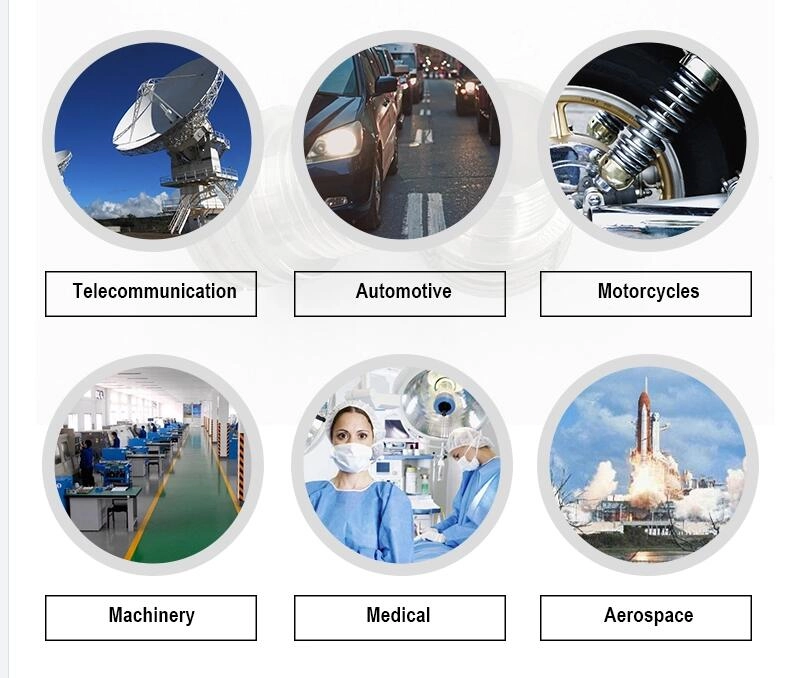
Notably, titanium is an abundant element in the Earth’s crust, ranking ninth in overall abundance, far exceeding that of commonly used metals such as copper, zinc, and tin. It is widely distributed in many types of rocks, particularly in sands and clays, where reserves are especially substantial.
Characteristics of Titanium
Titanium exhibits a range of exceptional properties, including high strength, high thermal strength, excellent corrosion resistance, outstanding low-temperature performance, and strong chemical activity.
Specifically, the strength of titanium far exceeds that of aluminum alloys, magnesium alloys, and stainless steels, making it one of the most outstanding structural metals. Titanium alloys also perform exceptionally well at elevated temperatures, with operating temperatures significantly higher than those of aluminum alloys, and can maintain long-term performance at 450–500°C.
In addition, titanium demonstrates excellent resistance to acids, alkalis, and atmospheric corrosion, particularly showing strong resistance to pitting corrosion and stress corrosion cracking. At low temperatures, titanium alloys such as TA7 retain good ductility and mechanical properties, even at temperatures as low as –253°C.
However, titanium exhibits high chemical reactivity at elevated temperatures and can easily react with gases such as hydrogen and oxygen in the air, forming hardened surface layers. Furthermore, titanium alloys have a relatively low thermal conductivity—approximately 1/4 that of nickel, 1/5 of iron, and 1/14 of aluminum—while their elastic modulus is roughly half that of steel. These characteristics make titanium indispensable across many advanced engineering applications.
Classification and Applications of Titanium Alloys
Titanium alloys can be classified according to their applications into heat-resistant alloys, high-strength alloys, corrosion-resistant alloys (such as Ti-Mo and Ti-Pd alloys), low-temperature alloys, and special functional alloys, including titanium–iron hydrogen storage materials and titanium–nickel shape memory alloys.
Although the application history of titanium alloys is relatively short, their outstanding performance has earned them numerous distinctions, one of which is the title “space metal.” This designation stems from their light weight, high strength, and excellent high-temperature resistance, making them ideal materials for aircraft and aerospace vehicles.
Currently, approximately three-quarters of global titanium and titanium alloy production is used in the aerospace sector, with many components that were once made from aluminum alloys now being replaced by titanium alloys.
Aviation Applications
Titanium alloys are critical materials in aircraft and engine manufacturing. They are widely used in forged fan components, compressor disks and blades, engine casings, exhaust systems, as well as structural components such as frames and bulkheads.

In aerospace applications, the high specific strength, corrosion resistance, and low-temperature performance of titanium alloys make them ideal for pressure vessels, fuel tanks, fasteners, instrument straps, structural frames, and rocket casings. Titanium alloy sheet weldments are extensively used in artificial satellites, lunar modules, manned spacecraft, and space shuttles.
In 1950, the United States first applied titanium alloys to the F-84 fighter-bomber, using them for non-load-bearing components such as rear fuselage heat shields, air ducts, and tail fairings. Beginning in the 1960s, titanium alloys expanded from rear fuselage applications to the mid-fuselage, partially replacing structural steel in bulkheads, beams, and flap tracks.
By the 1970s, with the mass production of civil aircraft such as the Boeing 747, titanium usage increased dramatically. The Boeing 747 alone used more than 3,640 kg of titanium, accounting for approximately 28% of the aircraft’s structural weight. Titanium alloys also became extensively used in rockets, satellites, and spacecraft.
Machining Characteristics of Titanium Alloys
First, titanium alloys have a relatively low thermal conductivity—only about one-quarter that of steel, one-thirteenth of aluminum, and one-twenty-fifth of copper. During machining, heat dissipation and cooling are therefore inefficient, leading to high temperatures concentrated in the cutting zone. This can cause workpiece deformation and elastic recovery, increase cutting torque, accelerate tool edge wear, and significantly reduce tool life.
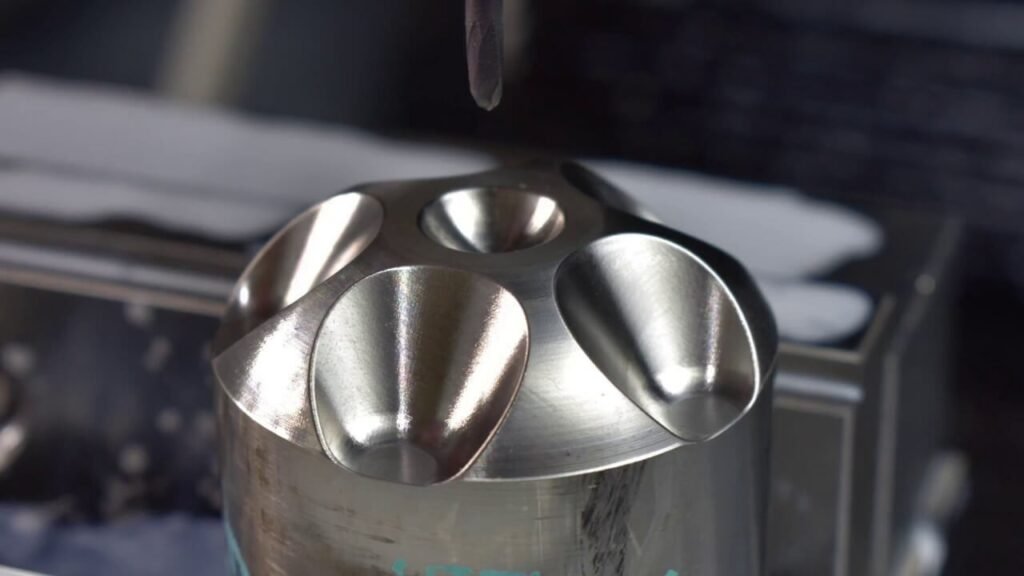
Second, because cutting heat is concentrated near the cutting edge and cannot dissipate quickly, friction on the rake face increases, making chip evacuation more difficult and further accelerating tool wear.
Finally, at elevated temperatures, the chemical activity of titanium alloys increases significantly. They tend to react with tool materials, resulting in adhesion, diffusion, and built-up edge formation. These phenomena can lead to tool sticking, burning, or breakage, severely affecting machining quality and efficiency.
Advantages of Machining Centers
Machining centers can process multiple components simultaneously, significantly improving production efficiency. Their high precision ensures excellent product consistency, and with tool compensation functions, the inherent accuracy of the machine tool can be fully utilized.
Machining centers also offer strong adaptability and flexibility, easily handling arc machining, chamfering, and fillet transitions. More impressively, they support multi-functional operations, including milling, drilling, boring, and tapping—all on a single machine.
From a cost-control perspective, machining centers allow for accurate cost accounting and production scheduling, eliminate the need for specialized fixtures, reduce overall costs, and shorten production cycles. They also greatly reduce labor intensity and can be seamlessly integrated with CAM software such as UG (NX) to perform multi-axis machining.
Selection of Cutting Tools and Coolants
The selection of appropriate cutting tools and coolants is critical when machining titanium alloys. Tool materials must exhibit high hardness and wear resistance to ensure efficient material removal. Coolant selection directly affects machining quality and efficiency—proper coolants reduce friction and cutting heat, extending tool life and improving machining accuracy.
1. Tool Material Requirements
- Tool hardness must be significantly higher than that of titanium alloys to enable effective cutting.
- Tools must possess sufficient strength and toughness to withstand high torque and cutting forces.
- Given the high toughness of titanium alloys, cutting edges must remain sharp; therefore, excellent wear resistance is required to minimize work hardening.
2. Selection of End Mill Geometry
Due to the unique machining characteristics of titanium alloys, end mill geometry differs significantly from conventional tools.
A smaller helix angle (β) is recommended to increase flute volume, improve chip evacuation, and enhance heat dissipation.

3. Cutting Parameter Selection
When machining titanium alloys, lower cutting speeds should be used, combined with appropriate feed rates, reasonable cutting depths, and controlled finishing allowances.
4. Coolant Selection and Application
Coolants containing chlorine should be avoided to prevent the formation of toxic substances and hydrogen embrittlement, as well as to reduce the risk of stress corrosion cracking at elevated temperatures.
It is recommended to use synthetic water-soluble emulsions or specially formulated coolants suitable for titanium alloy machining.
Take Action Now
Drawings or used samples for reverse engineering.
Speak to an Expert: peter@turbineblade.net
WhatsApp: +86 135 4409 5201
Why Choose Us
- 20+ years of experience — Over 100,000 blades delivered to 30+ customers worldwide.
- Full capability supply chain – 5-axis CNC, directional solidification furnaces and industrial CT scanners
- Global Recognition: Working with Siemens, Mitsubishi and other energy leaders.
 German
  English
  Arabic
  Moroccan Arabic
  Dutch
Dutch  French
  Italian
  Polish
  Portuguese
  Russian
  Spanish
  Turkish
  Azerbaijani
  Indonesian
  Thai
Thai  Japanese
  Korean
  Malay
Malay  Myanmar
  Serbian
  Swedish
  Vietnamese