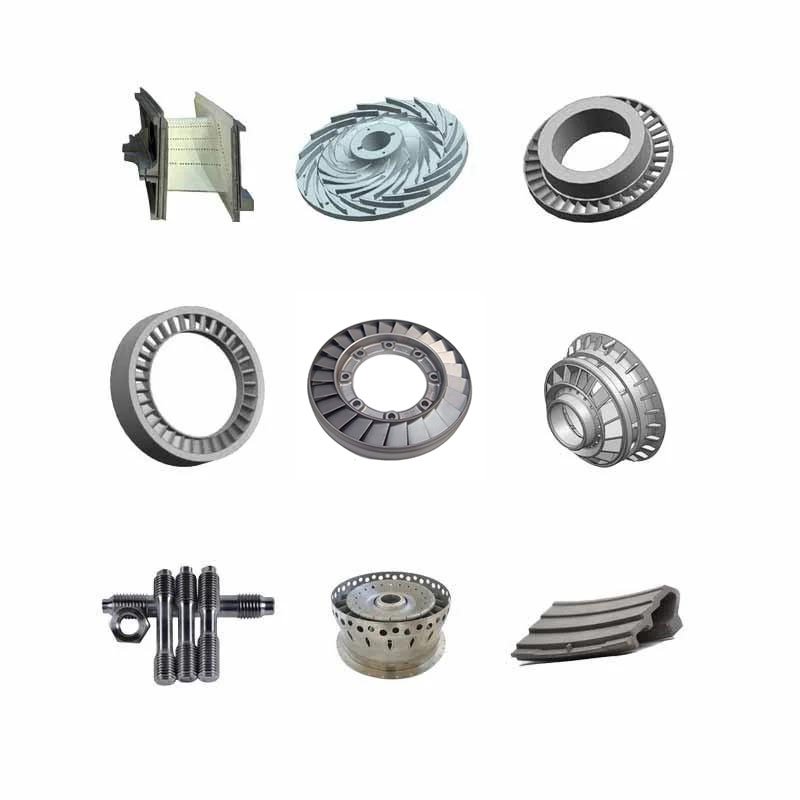
Turbine blades are key components in gas turbines, used to receive kinetic energy from high-temperature and high-pressure airflow, drive the turbine disc to rotate, and thus drive the mechanical device to work.
The turbine disc is one of the main rotating components in the turbine, responsible for supporting the turbine blades and transmitting kinetic energy, converting gas power into mechanical power.
Estator
El estator es un componente fijo de la turbina de gas que sirve para orientar el flujo de aire, de modo que interactúe con los álabes de la turbina y mejore la eficiencia en la conversión de energía.
Rotor
El rotor es un componente giratorio de la turbina de gas, que incluye el disco de la turbina y el rotor del compresor, y se encarga de recibir y transmitir energía cinética para accionar el dispositivo mecánico y ponerlo en funcionamiento.
Tobera de turbina
La tobera de la turbina es uno de los componentes clave de la turbina de gas; se utiliza para guiar el flujo de aire a alta velocidad, controlar el caudal y la dirección del flujo de aire, y mejorar la eficiencia en la conversión de la energía cinética.
Álabes guía
El álabe guía, también conocido como ala guía, se encuentra en la turbina y se utiliza para controlar la dirección y la velocidad del flujo de aire, optimizar el ángulo de entrada del flujo de aire y mejorar el rendimiento de la turbina.
Un segmento es un componente de una turbina, que suele encontrarse en la sección del compresor de una turbina de gas, y que se utiliza para aumentar la energía cinética del flujo de gas y reducir la presión.
Primavera
Los resortes desempeñan diversas funciones en las turbinas de gas, como mantener la posición de los componentes y proporcionar un soporte elástico.
Tornillos y tuercas
Los pernos y las tuercas se utilizan para unir y fijar los distintos componentes de una turbina de gas, con el fin de garantizar una unión firme y la estabilidad entre los componentes.
Free forging process
Free forging is a common metal processing process suitable for manufacturing large and complex-shaped parts. In turbine parts manufacturing, free forging usually involves the following steps:
Material selection
Select suitable high-temperature alloy materials, such as Titanium alloy, Inconel, Hastelloy, Nimonic, Monel, stainless steel, etc., which have excellent high-temperature strength and corrosion resistance.
Prefabricated billet
The selected metal material is heated to an appropriate forging temperature, usually above the recrystallization temperature of the material, to ensure the plasticity and deformation ability of the material.
Forging
Pressure is applied to the heated billet, and it is molded into the desired shape by forging dies or hammering. During the free forging process, the metal undergoes plastic deformation, thereby improving its mechanical properties and material uniformity.
Post-processing
After forging, heat treatment and surface treatment are usually required to adjust the structure, eliminate stress and improve surface quality. Machining, balancing and other process steps may also be required to meet the final engineering requirements and precision standards.
Advantages of free-forged turbine parts
Excellent mechanical properties: Free forging can significantly improve the mechanical properties of metal materials, including strength, toughness and fatigue resistance.
Good material uniformity: Since the metal is deformed under a uniform stress state during free forging, a uniform and defect-free material structure can be obtained.
Cost-effectiveness: Compared with other manufacturing methods (such as casting or welding), free forging is more cost-effective in manufacturing large and high-performance parts.
Application areas
Free-forged turbine parts are widely used in the following major fields:
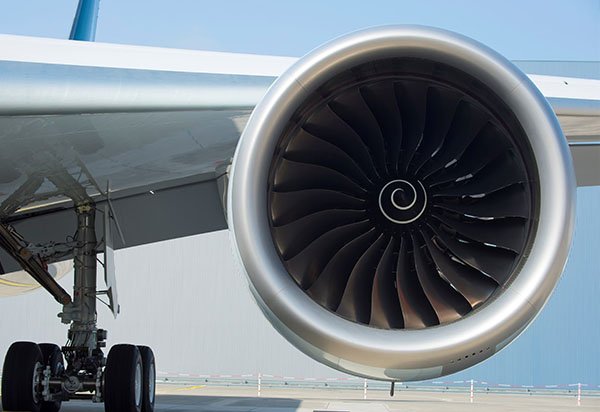
Aerospace: Turbine blades and hubs for aircraft engines.
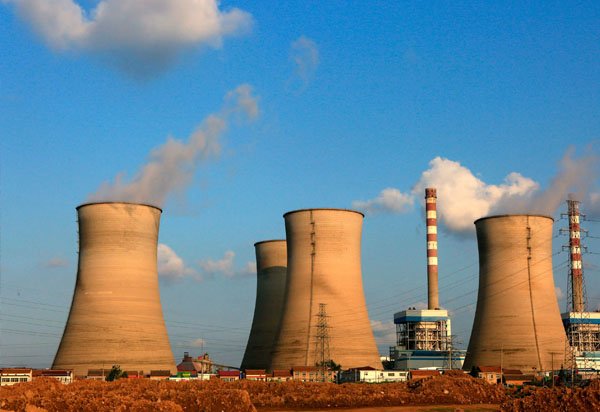
Energy: Turbine blades and hubs for gas turbines and steam turbines.
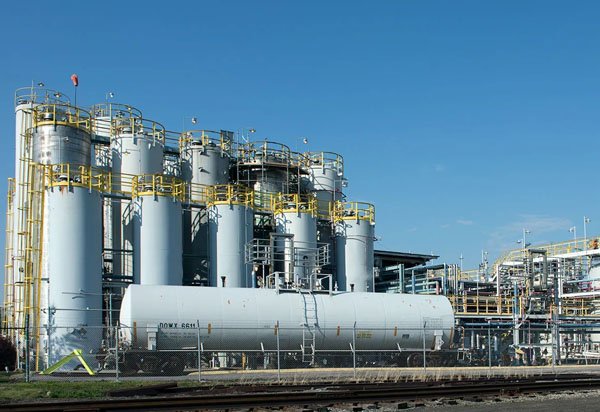
Industrial applications: Various turbomachinery equipment in the chemical, petroleum and marine industries.
Te ayudamos a encontrar los productos adecuados
Satisfacemos tus necesidades, resolvemos tus problemas


 English
 Arabic
 Moroccan Arabic
 Dutch
Dutch French
 German
 Italian
 Polish
 Portuguese
 Russian
 Spanish
 Turkish
 Azerbaijani
 Indonesian
 Thai
Thai Japanese
 Korean
 Malay
Malay Myanmar
 Serbian
 Swedish
 Vietnamese