Titanium alloy タービンインペラ refers to a turbine impeller component made of titanium alloy. Titanium alloy is composed of titanium and other metal elements (such as aluminum, iron, copper, nickel, etc.). It has excellent mechanical properties and corrosion resistance and is suitable for use in high temperature and chemical corrosion environments.
Titanium alloy has excellent strength and specific strength (strength to density ratio), and has a lower density than many traditional metal materials such as steel. This enables titanium alloy turbine impellers to reduce overall weight while maintaining strength, improving the performance and efficiency of equipment.
Good corrosion resistance
Titanium alloy has excellent corrosion resistance and can resist erosion by a variety of chemical media, especially in seawater and chloride environments. This makes titanium alloy turbine impellers suitable for use in marine engineering and chemical equipment, and can operate stably for a long time without damage.
耐熱性
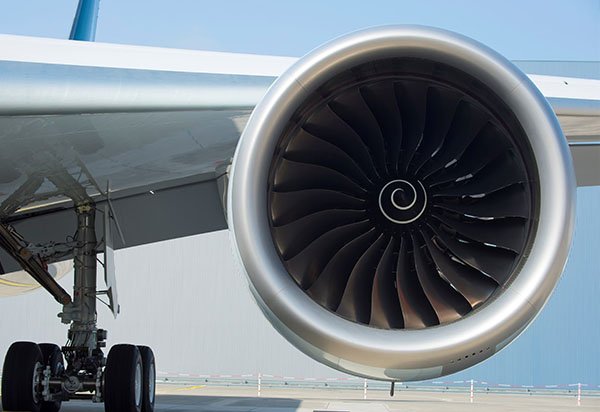
Titanium alloys still maintain good mechanical properties at high temperatures and are not easy to soften or fail. This makes titanium alloy turbine impellers suitable for high temperature application scenarios, such as turbine components in aircraft engines and gas turbines.
Excellent processing performance
Although titanium alloys have certain processing difficulties, they can be used to manufacture complex shapes and high-precision turbine impellers to meet specific engineering requirements through appropriate processing techniques (such as precision casting, heat treatment and machining).
The process of manufacturing Stellite turbine impellers
等軸結晶の鋳造 is a common casting method. By controlling the solidification process, the crystals grow evenly in all directions, so as to obtain castings with equiaxed crystal structure.
Machining is to perform cutting, drilling, milling and other processing operations on the workpiece by machine tools to achieve the required shape and dimensional accuracy.
Precision forging is to forge the billet at high temperature to achieve high precision and high surface quality requirements.
Rough forging is to forge the billet at a lower temperature, mainly used to improve the organizational structure and performance of the material.
Free forging is a processing method that uses impact force or pressure to make the metal deform freely in all directions between the upper and lower anvil surfaces, and obtains forgings of the desired shape, size and certain mechanical properties without any restrictions.
Application fields
航空宇宙: used to manufacture high-temperature impellers and nozzles in aircraft engines and turbochargers to provide efficient power output.
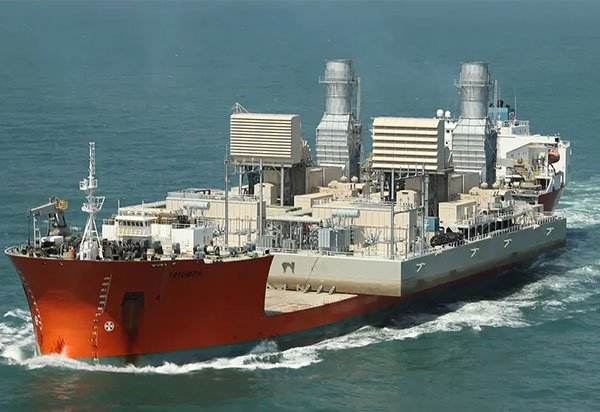
Energy industry: especially for gas turbines and turbochargers, which require high temperature and corrosion resistance.
Chemical industry: used to manufacture turbine impellers for chemical reactors, high-pressure pumps and valves to cope with highly corrosive media and high temperature conditions.
Marine engineering: in seawater environments, turbine impellers and other key components used for ships and offshore platforms to ensure long-term stable operation and resist seawater corrosion.




 English
 Arabic
 Moroccan Arabic
 Dutch
Dutch French
 German
 Italian
 Polish
 Portuguese
 Russian
 Spanish
 Turkish
 Azerbaijani
 Indonesian
 Thai
Thai Japanese
 Korean
 Malay
Malay Myanmar
 Serbian
 Swedish
 Vietnamese