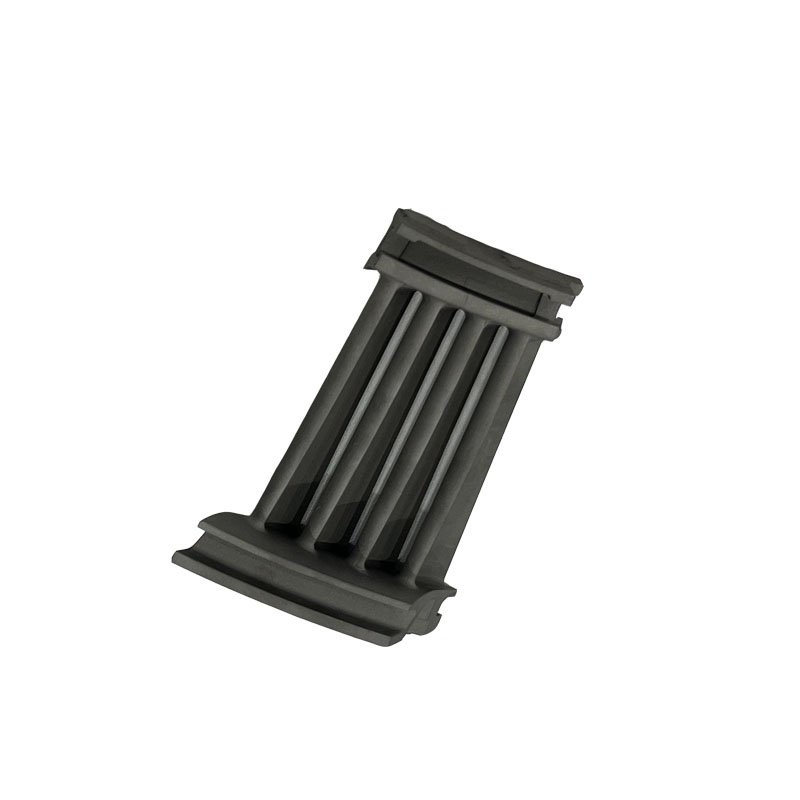
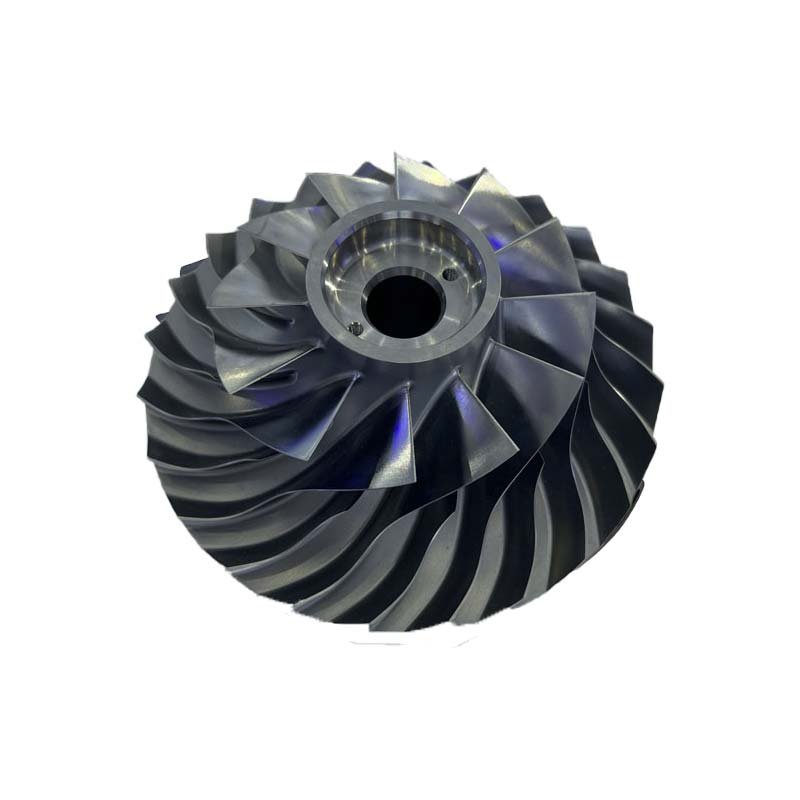
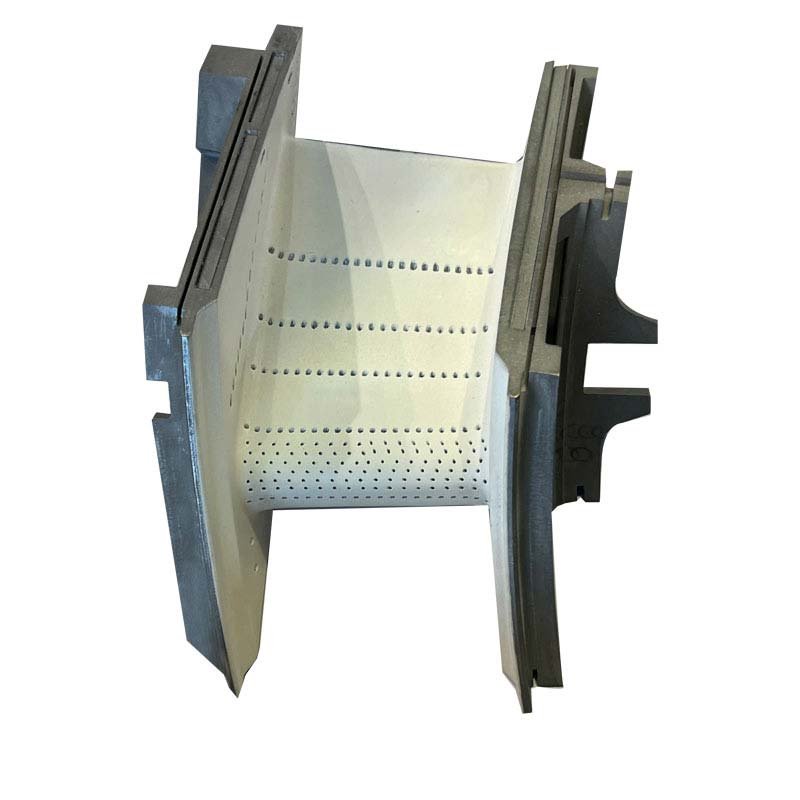
Nimonic alloys are known for their excellent high temperature strength, creep resistance and corrosion resistance and are widely used in aerospace, gas turbines and other high temperature industrial equipment. Nimonic peças de turbina are turbine components made of Nimonic alloys.
Nimonic alloys have extremely high temperature strength and creep resistance, and can maintain their mechanical properties for a long time in high temperature environments.
Corrosion and oxidation resistance
Nimonic alloys have excellent oxidation and corrosion resistance at high temperatures, especially in high temperature combustion environments in aviation and gas turbines.
High strength
By adding elements such as aluminum and titanium, Nimonic alloys can obtain extremely high strength through precipitation hardening.
Machinability
Despite the high strength of Nimonic alloys, they still have certain machinability and can be used to manufacture complex components through forging, casting and machining.
Common Nimonic alloy types
The earliest developed Nimonic alloy, mainly used for high temperature bolts and other high temperature fasteners.
Widely used in turbine blades, turbine disks and other high temperature components, with excellent high temperature strength and corrosion resistance.
Further optimized on the basis of Nimonic 80A, with higher strength and creep resistance, commonly used in high temperature turbine blades and gas turbine components.
[table id=4 /]
Manufacturing and Processing Technology
Casting
Suitable for manufacturing turbine parts with complex shapes. High precision and excellent surface quality can be obtained through precision casting.
Forging
Improve the internal structure and strength of the material. Suitable for parts that require high stress and high strength.
Machining
Finish the blank after casting or forging to achieve the final dimensional accuracy and surface finish.
Heat Treatment
Optimize the mechanical properties and corrosion resistance of Nimonic alloys through methods such as precipitation hardening treatment.
As pás de turbina fabricadas a partir de peças fundidas equiaxiais são amplamente utilizadas em motores de aviação e turbinas a gás. Estas pás apresentam boa resistência a altas temperaturas e à corrosão, sendo adequadas para componentes de turbinas sujeitos a altas temperaturas e altas pressões.
Os discos de turbina são componentes importantes que suportam as pás da turbina e transmitem potência. O processo de fundição equiaxial permite produzir discos de turbina com boas propriedades mecânicas e durabilidade, adequados para diversos equipamentos de turbina.
Os revestimentos da câmara de combustão têm de funcionar em ambientes de alta temperatura e alta pressão. O processo de fundição equiaxial pode produzir revestimentos com resistência à oxidação a alta temperatura e resistência à corrosão.


 English
 Arabic
 Moroccan Arabic
 Dutch
Dutch French
 German
 Italian
 Polish
 Portuguese
 Russian
 Spanish
 Turkish
 Azerbaijani
 Indonesian
 Thai
Thai Japanese
 Korean
 Malay
Malay Myanmar
 Serbian
 Swedish
 Vietnamese